|
|
|
|
|
|
|
|
|
|
|
|
|
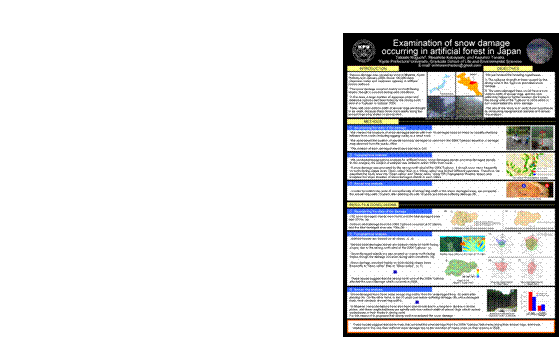
Examination of snow damage occurring in artificial forests in
Japan.
|
|
|
Noguchi,
T., Kobayashi, M., Tanaka, K.
|
|
|
Plantations of Japanese cedar and Japanese cypress were
promoted aggressively after World War II
|
|
in Japan. However, many plantations have since been abandoned due to
a long-term decline in
|
|
timber prices, caused by high-volume imports of foreign lumber.
Trees in abandoned plantations
|
|
are spindly with non-uniform width of annual rings,
causing weakness in tree trunks. This weakness
|
increases the risk of weather-related damage such as wind and snow
damage. Moreover, this
|
|
weather-related damage has been increasing in line with
global climate change in recent years. In
|
|
fact, serious snow damage occurred in the central part of Kyoto
Prefecture in January 2009. The
|
|
results of topographical analysis by GIS showed that
both the snow damage during calm conditions
|
|
in 2009 and the wind damage caused by Typhoon 23 in 2004 occurred
mainly on north-facing
|
|
slopes. Annual ring analysis showed that the outer rings of
snow-damaged trees were
|
|
extraordinarily narrow. These results suggest that some
trees surviving the wind damage caused by
|
|
Typhoon 23 had cracked along their annual rings (ring
shake), and trees weakened in this way then
|
|
suffered snow damage due to the accretion of heavy snow on their
crowns.
|
|